Workplace Wellbeing & Injury Prevention Case Study
National Manufacturer & Distributor
The Client
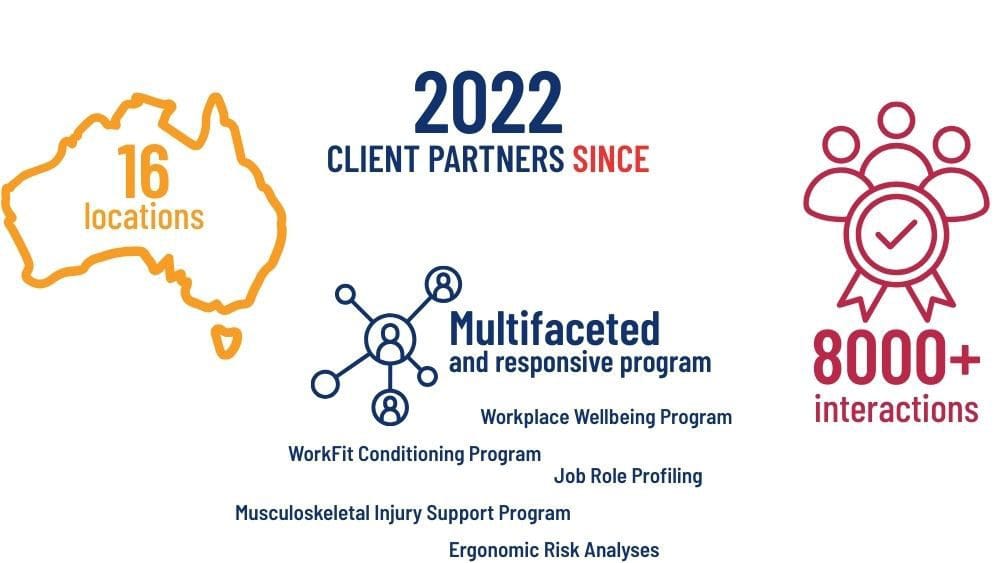
Since 2022, WFR has partnered with one of Australia’s largest national food manufacturers and distributors to deliver a comprehensive workplace wellbeing and injury prevention program across 16 sites and more than 2,500 employees.
Client Goals
Improve workplace wellbeing to reduce absenteeism, minimise musculoskeletal risk, and support safer, more productive operations across all regions.
Key Considerations
The client’s workforce undertakes a broad range of physically demanding tasks within a fast‑paced food manufacturing and distribution environment. These activities include receiving and handling raw materials, operating production and packaging machinery, managing inventory, maintaining equipment, performing repetitive manual tasks, and performing administrative tasks. Due to the variety and physical nature of the roles, several risks were identified, for example, musculoskeletal injuries resulting from manual handling, repetitive movements, and prolonged sitting.
The majority of all serious workplace injuries and diseases in NSW are Musculoskeletal Disorders (MSDs), such as sprains and strains.
52% of all serious workplace injuries and diseases in NSW are Musculoskeletal Disorders (MSDs), such as sprains and strains.Key stats:
- MSDs account for 52% of serious claims.
- Body Stressing: 32.7% of all serious claims.
- Average cost per claim: $64,759.
- 20 weeks of lost time from work per claim. (Safework NSW, 2024)
Given the scale of operations and the diversity of roles across multiple sites, the client required a consistent and scalable wellbeing and injury‑prevention program that could be applied nationally while remaining adaptable to site‑specific risks and operational demands.
Key priorities included:
- Reducing the frequency and severity of musculoskeletal injuries.
- Providing engaging, on-site wellbeing support.
- Addressing manual tasks and ergonomic risks.
- Ensuring each site could access services suited to its specific needs.
- Collecting reliable data to guide ongoing safety decisions.
How WFR achieved its Workplace Wellbeing goal
WFR delivers coordinated national solutions across all sites and departments targeting;
Injury Prevention & Risk Reduction
To support the client’s safety objectives, we focused on reducing manual handling risk through:
- Manual task coaching.
- Ergonomic assessments and site reviews.
- Workplace stretching and mobility programs.
- Training in safe movement patterns and physical resilience.
Each location receives a customised schedule to ensure relevance, engagement, and maximum impact.
Workplace Wellbeing
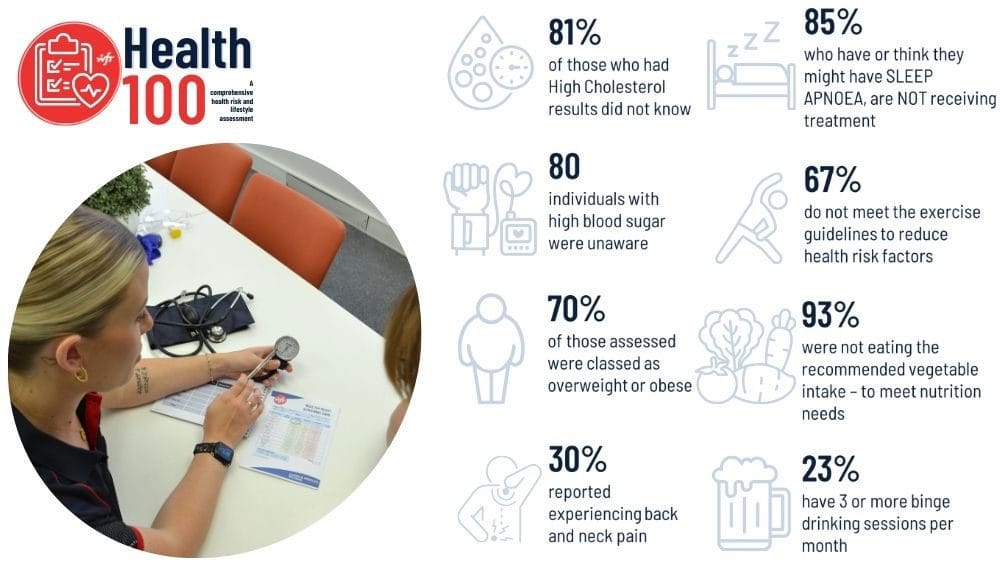
- Health screenings and personalised coaching.
- Educational health workshops and wellbeing events.
- Regular onsite group exercise sessions across all locations.
- Tailored wellbeing activities based on site-specific requirements.
Program Outcomes
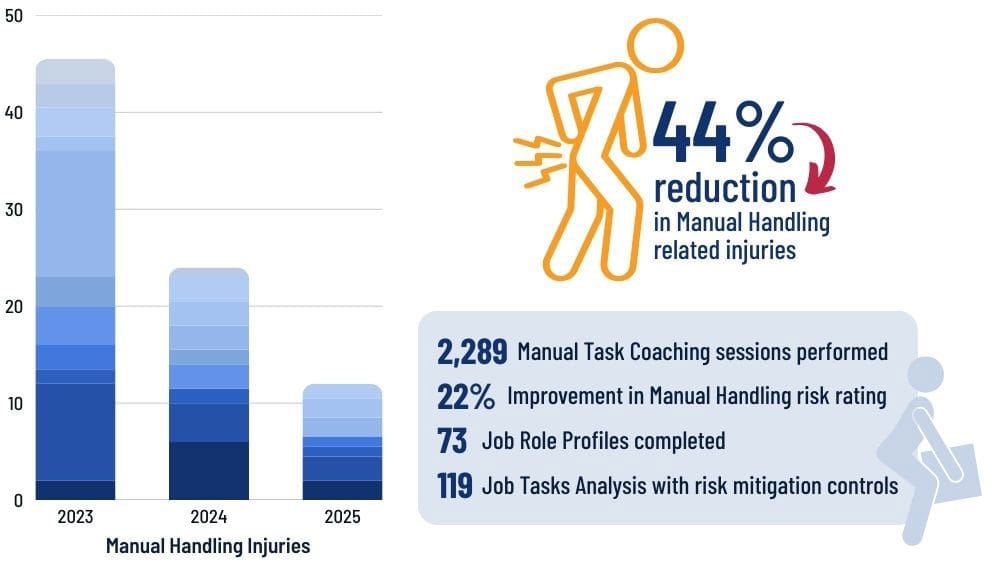
The business has seen a steady decline in musculoskeletal injuries since launching the Injury Prevention Program.
WFR collects and reports on detailed metrics, including:
- Pre‑ and post-program injury frequency.
- Manual handling incident trends.
- Health screening insights.
- Participation and engagement data.
- Site-by-site performance.
Participation & Engagement
The program gained strong engagement across the national workforce, including:
WFR has been delivering a full scope of solutions in the programs. Targeting their main agenda, these solutions were the most highly repeated and valuable.
Results & Impact
This long-term partnership continues to deliver measurable improvements across:
- Workplace safety.
- Physical health.
- Engagement in wellbeing activities.
- Reduction in injuries and lost-time events.
- Increased confidence in manual handling tasks.